
24 Aug, 2026 | Yong | No Comments
Suffering from Allergies? A Traditional Chinese Medicine Perspective
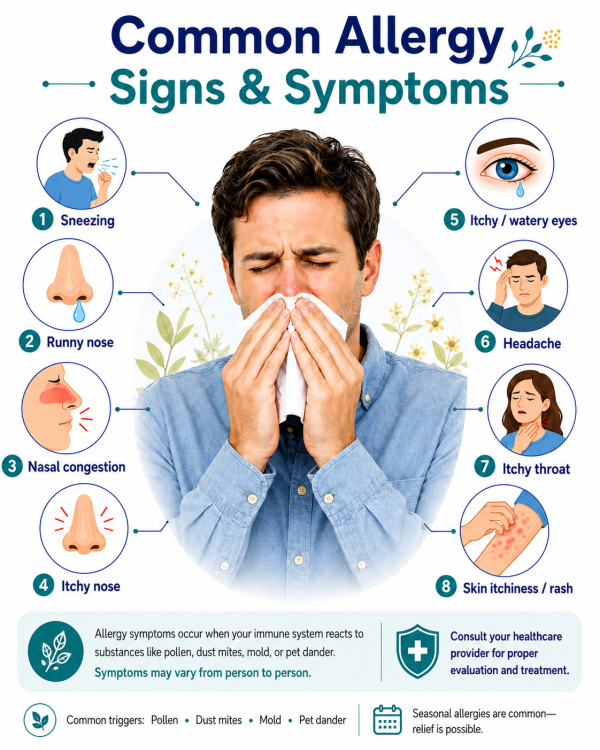
Understanding common allergy signs, TCM patterns, and treatment principles
| Common allergy symptoms can include repeated sneezing, a runny or blocked nose, itchy nose or throat, watery or itchy eyes, sinus pressure or headache, cough, wheeze, skin itching or hives, and tiredness. Symptoms may be seasonal or occur after exposure to dust, pollen, pets, mould, foods, medicines, insect stings, or other triggers. |
Signs and symptoms commonly associated with allergies
Allergic reactions vary from person to person and depend on the trigger and the body system involved. Common symptoms include:
• Frequent or sudden bouts of sneezing
• Clear, watery nasal discharge or a persistently runny nose
• Blocked or congested nose, reduced sense of smell, or post-nasal drip
• Itching of the nose, eyes, throat, palate, or ears
• Red, watery, puffy, or irritated eyes
• Sinus pressure, facial heaviness, or headache
• Dry cough, throat irritation, chest tightness, or wheezing in some people
• Skin redness, itching, eczema-type flares, or hives in some allergic reactions
• Fatigue, poor sleep, difficulty concentrating, or feeling “foggy” when symptoms are persistent
| Urgent medical attention: difficulty breathing, swelling of the tongue or throat, faintness, a sudden drop in blood pressure, or rapidly worsening widespread symptoms may indicate anaphylaxis. Call emergency services immediately. |
How Traditional Chinese Medicine understands allergy attacks
From a Traditional Chinese Medicine (TCM) perspective, allergy symptoms are not described only by the allergen itself. Practitioners consider the pattern of symptoms, constitution, digestive function, respiratory function, exposure to climate or environmental factors, and whether the presentation is acute, recurrent, or chronic.
In TCM theory, the Lung system governs the nose and respiration and helps disperse protective Qi at the body surface. The Spleen system is associated with transforming food and fluids and supporting the production of Qi. The Kidney system is considered important for constitutional strength and for “grasping” Qi. Recurrent allergies may therefore be interpreted as a combination of an external trigger, often described as Wind, together with an underlying weakness of the body’s defensive Qi (Wei Qi).
| TCM pattern differentiation is a clinical framework, not a biomedical diagnosis. Two people with the same pollen or dust allergy may be assigned different TCM patterns because their symptom qualities, tongue, pulse, digestion, energy level, temperature preference, and history differ. |
Pattern One: Wind-Cold invading the Lung
Often considered when an acute allergy flare is dominated by clear, watery discharge and a cold-type presentation.
Typical signs and symptoms:
• Sudden, repeated sneezing
• Profuse clear or watery nasal discharge
• Nasal congestion with itching of the nose or throat
• Watery eyes
• Feeling chilled, sensitive to cold air, or symptoms worsening in cold or windy weather
• Little or no thirst
• Possible mild headache or body aches
Possible tongue and pulse features: A practitioner may describe the tongue as relatively pale with a thin white coating and the pulse as floating or tight, depending on the presentation.
General TCM treatment principle: Disperse Wind, release the exterior, warm and diffuse the Lung, and help restore the Lung’s descending and dispersing function.
Pattern Two: Wind-Heat invading the Lung
Often considered when an acute flare has more heat, redness, irritation, or thicker secretions.
Typical signs and symptoms:
• Sneezing and nasal congestion
• Itchy, red, or irritated eyes
• Nasal or throat irritation
• Yellowish or thicker nasal discharge rather than purely clear discharge
• Dry mouth or increased thirst
• Feeling warm or mildly feverish
• Headache, facial pressure, or a sore throat may accompany the episode
Possible tongue and pulse features: The tongue may appear slightly red, especially at the tip or sides, with a thin yellow coating; the pulse may be floating and relatively rapid.
General TCM treatment principle: Disperse Wind, clear Heat, open the nasal passages, and support the Lung in regulating respiration and the nose.
Pattern Three: Lung Qi and Spleen Qi deficiency with Dampness or Phlegm
Commonly discussed in recurrent or long-standing allergies, particularly when symptoms occur with fatigue, weak digestion, or a tendency to produce mucus.
Typical signs and symptoms:
• Frequent allergic episodes or symptoms that return easily
• Persistent or recurrent runny/blocked nose
• Clear or whitish mucus, sometimes with a heavy or “mucusy” sensation
• Shortness of breath on exertion, weak voice, or easy fatigue in some people
• Poor appetite, bloating, loose stools, or digestive sensitivity
• Heaviness of the body, sluggishness, or difficulty concentrating
• Symptoms may worsen after overwork, poor sleep, or dietary excesses that aggravate Dampness
Possible tongue and pulse features: The tongue may be pale or swollen, sometimes with teeth marks and a white or slightly greasy coating. The pulse may be weak or soft.
General TCM treatment principle: Strengthen Lung Qi and Spleen Qi, support Wei Qi, transform Dampness/Phlegm, and improve the body’s ability to cope with recurrent triggers.
Pattern Four: Kidney Qi or Kidney Yang deficiency
Usually considered in more chronic, constitutional, or recurrent presentations, especially when the person also shows signs of coldness or reduced vitality.
Typical signs and symptoms:
• Long history of recurrent allergies or asthma-like tendency
• Symptoms that are worse in cold weather or early morning
• Clear nasal discharge with chronic congestion
• Low energy, weakness, or poor recovery after illness
• Cold hands and feet or a strong preference for warmth
• Lower-back or knee weakness/soreness in some people
• Frequent urination or other constitutional signs may be considered as part of the overall pattern
Possible tongue and pulse features: The tongue may be pale and moist, and the pulse may be deep and weak. These findings are interpreted together with the full clinical history rather than in isolation.
General TCM treatment principle: Support Kidney Qi or Kidney Yang, strengthen constitutional Qi, assist the Lung’s descending function, and reduce the tendency toward repeated attacks.
Why the pattern may change over time
A person may not stay in one TCM pattern. For example, an acute episode may initially look like Wind-Cold, later develop more Heat and irritation, or repeatedly recur because of an underlying Lung/Spleen deficiency. TCM practitioners therefore reassess the pattern as symptoms change rather than using one fixed formula for every allergy episode.
Common TCM treatment approaches
Depending on the individual pattern, a registered Chinese medicine practitioner may consider a combination of:
• Acupuncture, with points selected according to the individual pattern and symptom location
• Chinese herbal medicine prescribed or dispensed after an individual assessment
• Dietary and lifestyle advice aimed at supporting sleep, digestion, energy, and avoidance of known triggers
• Self-care strategies such as keeping the bedroom and bedding clean, reducing exposure to dust or pollen when practical, and maintaining adequate hydration
| Herbal medicines and acupuncture are not substitutes for prescribed emergency medication or medical assessment where these are needed. People who are pregnant, breastfeeding, taking prescription medicines, or managing significant medical conditions should discuss herbal treatment with a qualified practitioner and their usual healthcare professional. |
When to consider a professional assessment
• Allergy symptoms are frequent, persistent, or affecting sleep and daily activities
• You are unsure whether symptoms are caused by allergy, infection, asthma, sinus disease, medication, or another condition
• Symptoms are changing, becoming more severe, or not responding to your usual management
• You want an individual TCM pattern assessment rather than a general symptom-based approach
A personalised approach
If sneezing, a runny or blocked nose, headache, itchiness, watery eyes, or recurring seasonal symptoms are affecting your quality of life, a qualified Chinese medicine practitioner can assess your individual presentation and explain which TCM pattern best fits your symptoms. The aim is not simply to label the allergen, but to understand the whole pattern of imbalance described in TCM theory and choose treatment accordingly.
Important information
This article is for general educational information only and does not provide medical diagnosis or individual treatment advice. Allergy symptoms can overlap with infections, asthma, sinus disorders, medication reactions, and other conditions. Seek medical care for severe, persistent, or uncertain symptoms. Call 000 in Australia for a suspected life-threatening allergic reaction.