
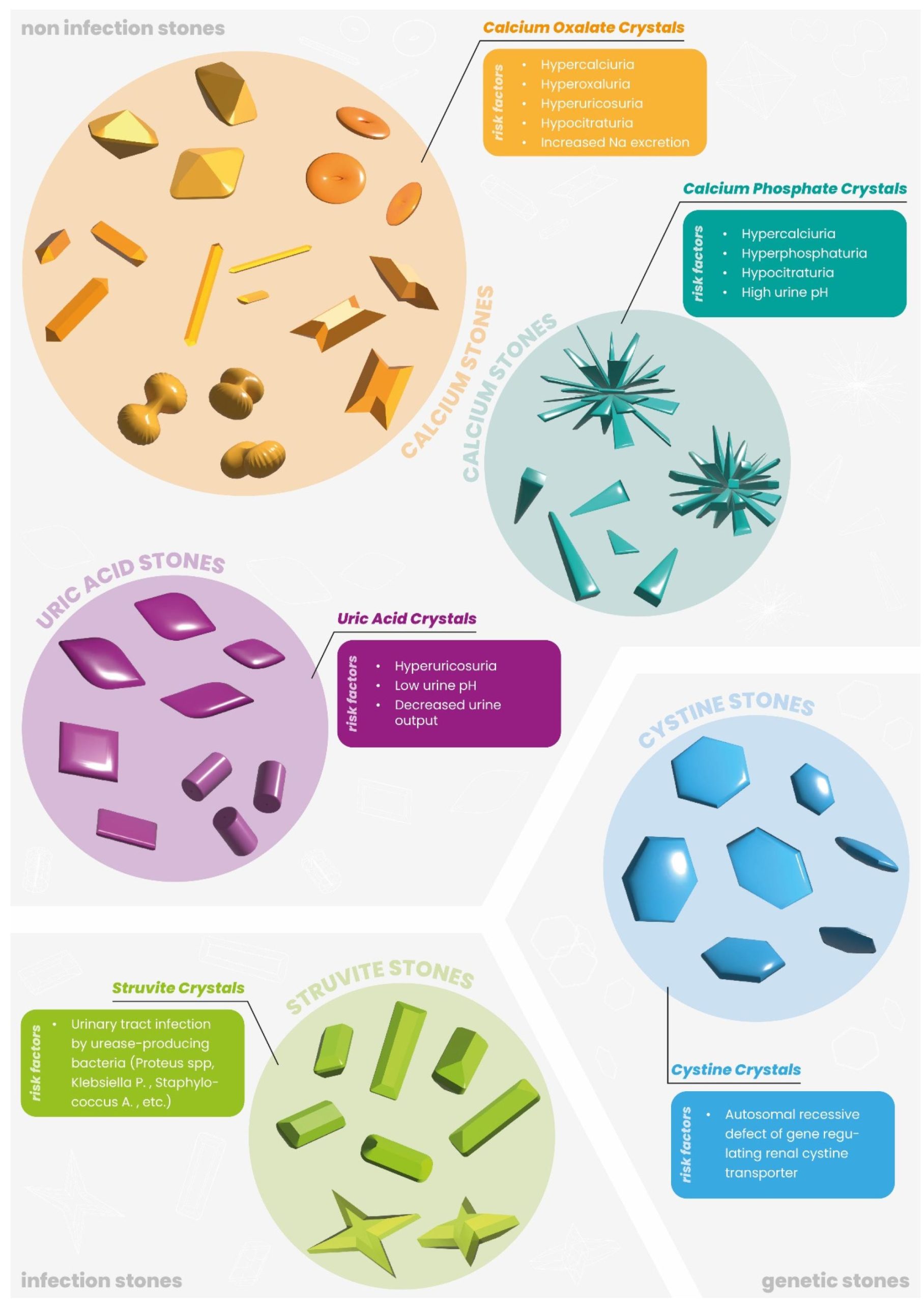
Kidney stones form when certain minerals and salts in the urine become too concentrated and crystallize. Over time, these tiny crystals stick together and grow into stones.
How Kidney Stones Form
Step 1: Urine Becomes Concentrated
Normally, urine contains water and dissolved minerals. If you do not drink enough fluids, the urine becomes concentrated, allowing minerals to come into contact and crystallize.
Step 2: Crystals Form
Common minerals that form crystals include:
- Calcium
- Oxalate
- Uric acid
- Phosphate
- Cystine
Step 3: Crystals Grow
Small crystals can enlarge as more minerals attach to them.
Step 4: Stone Develops
The crystals combine into a stone that may remain in the kidney or move into the ureter (the tube connecting the kidney to the bladder).
Step 5: Symptoms Occur
When a stone moves or blocks urine flow, it may cause:
- Severe flank or back pain
- Groin pain
- Blood in urine
- Nausea and vomiting
- Frequent urination
- Burning during urination
Main Causes and Risk Factors
1. Dehydration (Most Common)
Not drinking enough water leads to concentrated urine.
2. High Salt Intake
Excess salt causes the kidneys to excrete more calcium into the urine.
3. Diet High in Oxalates
Foods rich in oxalates include:
- Spinach
- Beetroot
- Rhubarb
- Almonds
- Chocolate
- Tea
4. Excess Animal Protein
Large amounts of:
- Red meat
- Organ meats
- Shellfish
can increase uric acid and stone risk.
5. Obesity and Metabolic Syndrome
These conditions alter urine chemistry and increase stone formation.
6. Medical Conditions
Certain conditions increase risk, including:
- Hyperparathyroidism
- Gout
- Inflammatory Bowel Disease
- Recurrent urinary tract infections
7. Family History
If close relatives have kidney stones, your risk is higher.
Types of Kidney Stones
| Type | Percentage | Common Causes |
|---|---|---|
| Calcium oxalate | 70–80% | Dehydration, high salt, high oxalate diet |
| Calcium phosphate | 10–15% | High urine pH, hormonal disorders |
| Uric acid | 5–10% | High meat intake, gout |
| Struvite | 5–10% | Chronic urinary infections |
| Cystine | Rare | Genetic disorder |
Write Reviews
Leave a Comment
No Comments & Reviews